I grew up hearing that my family had a hand in the Revolution. The version I got was that William Whipple, one of the men who signed the Declaration of Independence, sat somewhere up in our tree. It's a good story, and I believed it for a long time. For the country's 250th I finally sat down and traced it to the ground. It turned out to be wrong — and what's actually there is better, because it's real.
the legend
The name people repeated was William Whipple (1730–1785): New Hampshire delegate, signer, brigadier general. A good name to inherit. Two things kill the claim, though.
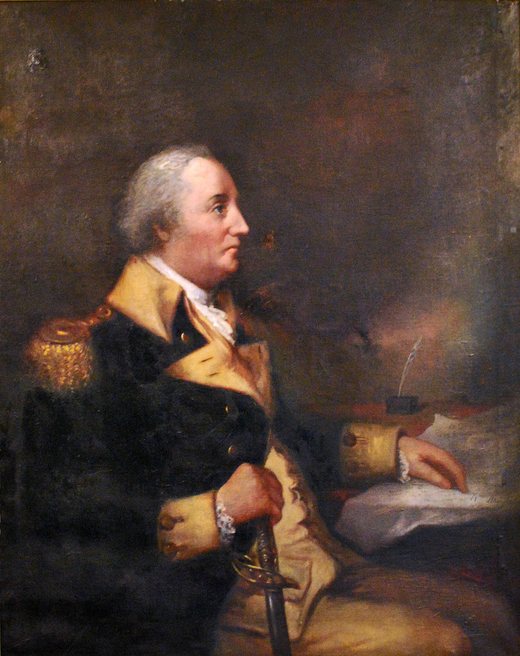
First, the signer left no surviving children — they all died young, so nobody alive descends from him. Second, and this is the one that settles it: he was an Ipswich, Massachusetts Whipple, a family that traces back to Matthew Whipple of Bocking, Essex. Mine are the Providence, Rhode Island Whipples — a separate family that happens to carry the same name. Genealogists spend real ink warning people not to run the two together.
So the legend was only ever a collision of names: two unrelated families, one of them famous, slowly welded into one by people who wanted the connection to be true. It happens constantly. It's probably the most common way a family tree goes wrong.
the real patriot
Here's the part I didn't see coming. My line does run back to a Whipple who mattered in the Revolution. Just not that one.
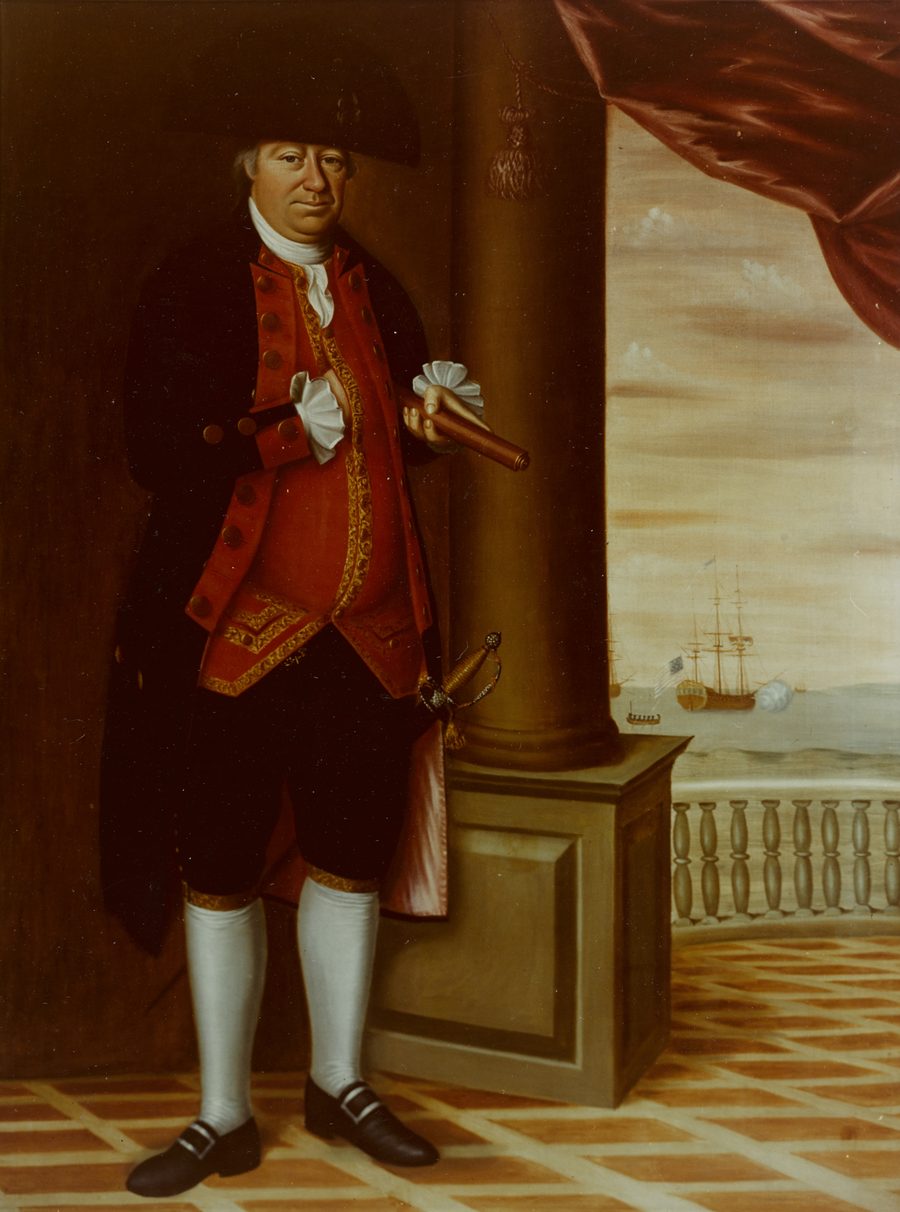
His name was Abraham Whipple (1733–1819), out of Providence. On the night of June 9, 1772 — a year before anyone threw tea into Boston Harbor — he rowed out with about fifty men and burned the Gaspee, a British revenue schooner that had run itself aground chasing a smuggler off Pawtuxet. It was the first time colonists fired on the Crown. He went on to fire the first authorized naval shot of the war, made commodore in 1775, and commanded the Continental Navy ships Providence and Gamecock.
The British didn't forget it. A year or so later, Capt. James Wallace of HMS Rose, who was patrolling Narragansett Bay, sent Whipple a note:
“You, Abraham Whipple, on the 10th of June, 1772, burned His Majesty’s vessel, the Gaspee, and I will hang you at the yard-arm.”— Capt. James Wallace, HMS Rose “To Sir James Wallace, Sir: Always catch a man before you hang him.”— Abraham Whipple, in reply
Abraham and I come off the same immigrant — Capt. John Whipple of Providence (c.1617–1685), a carpenter and innkeeper who fought in King Philip's War — through two of his sons. That puts the commodore in my blood at a distance I can count:
3rd cousin, 6 times removed.
the other patriots at the table
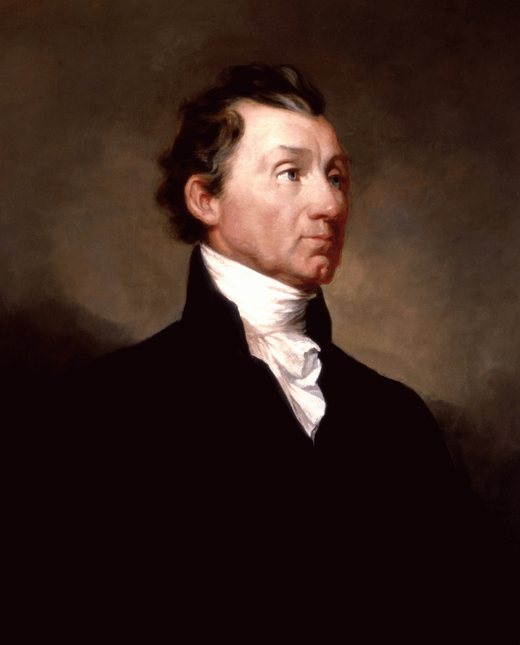
The Rhode Island side doesn't stop with the Whipples. My 5th-great-grandmother, Freelove Olney (1748–1807), married Jesse Whipple — and the Olneys of Providence were one of the hardest-fighting families in the state. Col. Jeremiah Olney commanded the 1st Rhode Island, the “Black Regiment.” Col. Stephen Olney took a bayonet storming a redoubt at Yorktown and is credited with saving James Monroe's life at the Battle of Princeton. Capt. Joseph Olney served in the Continental Navy. I can't prove yet exactly how close a cousin Freelove was to those particular men — that thread hits a wall — but she was a Providence Olney of that same generation.
Jeremiah first. In October 1777, a Hessian force surrounded Fort Mercer on the Delaware and demanded its surrender, with no quarter promised if the garrison refused. Olney gave the answer for the fort:
“We shall not ask nor expect any quarter, and mean to defend the fort to the last extremity.”— Lt. Col. Jeremiah Olney at Fort Mercer, October 1777, relaying the answer of the fort's commander, Col. Christopher Greene. The Hessians were thrown back.
Stephen left his own account of Yorktown, four years later — the night he led men over the wall of Redoubt 10 with fixed bayonets. It's not a tidy heroic line. It's a man remembering exactly what it felt like:
“I had not less than six or eight bayonets pushed at me; I parried as well as I could with my espontoon… one bayonet pierced my thigh, another stabbed me in the abdomen just above the hip-bone.”— Capt. Stephen Olney, from his memoir of storming Redoubt 10 at the Siege of Yorktown, 1781. He survived the wound that was expected to kill him.
the other side of the family: a signer after all — and the Mayflower
All of that is my father's Whipple side. This summer I finally digitized the other half — my grandmother Virginia Keene Howard's handwritten charts, some of them reaching back four centuries — and folded them into the tree. The maternal side turned out to be carrying two things the Whipple side never did.
The famous relative the Whipple legend promised and couldn't produce — a signer — was sitting quietly on my mother's side the whole time. Just not of the Declaration. Of the Constitution.
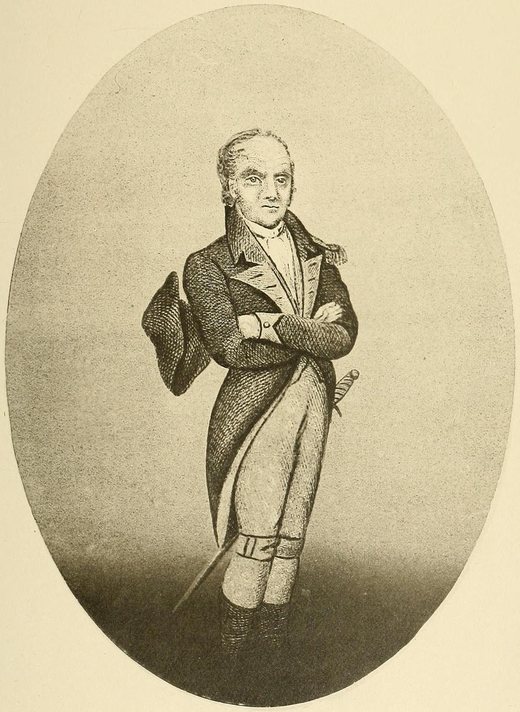
My 5th-great-grandmother was Hannah Few. Her brother was William Few (1748–1828): Georgia delegate to the Constitutional Convention, one of the men who signed the United States Constitution, and one of Georgia's first two U.S. Senators. That makes the signer my 5th-great-granduncle — a documented collateral line, not a hopeful guess. The record independently confirms that William Few's sister Hannah married my ancestor Rhesa Howard. Their father, my 6th-great-grandfather, was Col. William Few Sr. (1714–1794), an officer in the Continental Army.
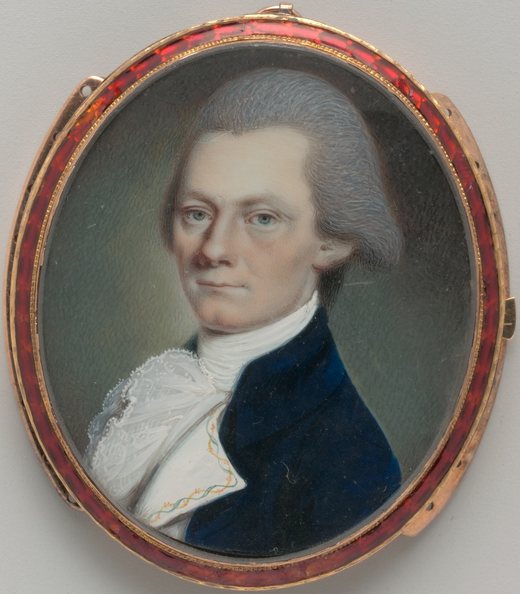
Few missed big stretches of the Convention — he kept getting called away to the Continental Congress — but he was in the room for the part that counted, and he signed. Years later, in his own autobiography, he wrote about the moment the thing actually came together. There's no triumphalism in it, which is why I like it:
“A plan of Constitution was formed on principles which did not altogether please anybody.”— William Few, recalling the Constitutional Convention in his autobiography. They signed it anyway.
U.S. Constitution, is my
5th-great-granduncle.
And behind the Few line, the maternal charts keep going — all the way to Plymouth. Through my grandmother's mother, the Barrett and Bosworth families of Massachusetts, the line reaches John Howland and Elizabeth Tilley, two passengers on the Mayflower in 1620, along with Elizabeth's father John Tilley, a third. Howland is the one who famously went over the side in a mid-Atlantic gale and got hauled back aboard with a boat hook. If he'd drowned, this whole branch of the family never happens.
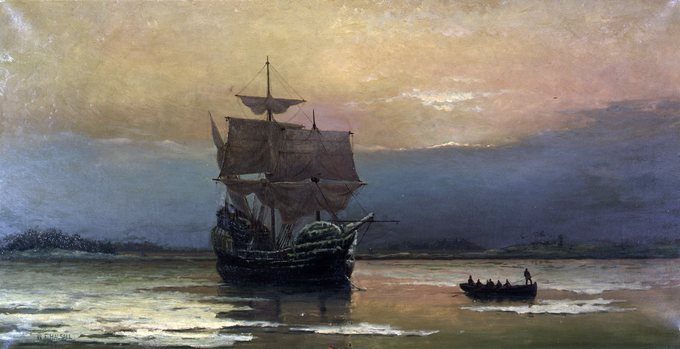
is my 10th-great-grandfather.
the Loyalists in the family, too
An honest tree doesn't only keep the winners. On this same maternal side, the Blue family were Highland Scots out of Kintyre who sailed for the North Carolina Cape Fear in 1748 — my ancestors Malcolm Blue, and after him Dougald and Neil Blue. When the Revolution came, the Cape Fear Highlanders mostly stood with the Crown. A lot of them had sworn loyalty to the King after Culloden as the price of getting out of Scotland alive, and they kept the oath: in February 1776 the Highland Loyalists marched to the Battle of Moore's Creek Bridge and were broken by Patriot militia in one of the first Patriot wins of the war.
So the same tree that holds a signer, a commodore, and three Mayflower Pilgrims also holds a family that bet on the King and lost. Both are mine. The Revolution was a civil war before it was a founding, and honest genealogy remembers the people who picked the other side, not only the ones the monuments went up for.
why the true version is the better one
Keeping the signer would have been easy. Instead I did the boring thing: went back to my own immigrant and looked at who his descendants actually were. The famous name fell off on its own, no wishful thinking required. That's the whole method, and it works for a lot more than family trees — trace your own line to its source before you claim the shared ancestor. A brick wall is an honest “I don't know yet.” Don't paint a famous name over it just because the dates almost line up.
Same surname, same war, same decade. A different man — and the real one had been in the family the whole time.
Built for the 250th from my own family records — the Whipple line and my grandmother Virginia Keene Howard's handwritten charts — cross-checked against the Great Migration Study Project, the Gaspee Days Committee (gaspee.org), the Rhode Island Historical Society, the General Society of Mayflower Descendants, the New Georgia Encyclopedia, and public genealogical archives (WikiTree, FamilySearch). Quotations are drawn from those archives and the subjects' own memoirs and autobiography. Relationships are computed from documented lines of descent; the pre-1685 English origins of Capt. John Whipple of Providence remain unproven, as they should be until they're proven. The complete family tree — 186 people across both sides — is kept in a private family archive.